
When Can You Ride After a Total Knee Replacement? A Cyclist’s Guide to TKA Recovery
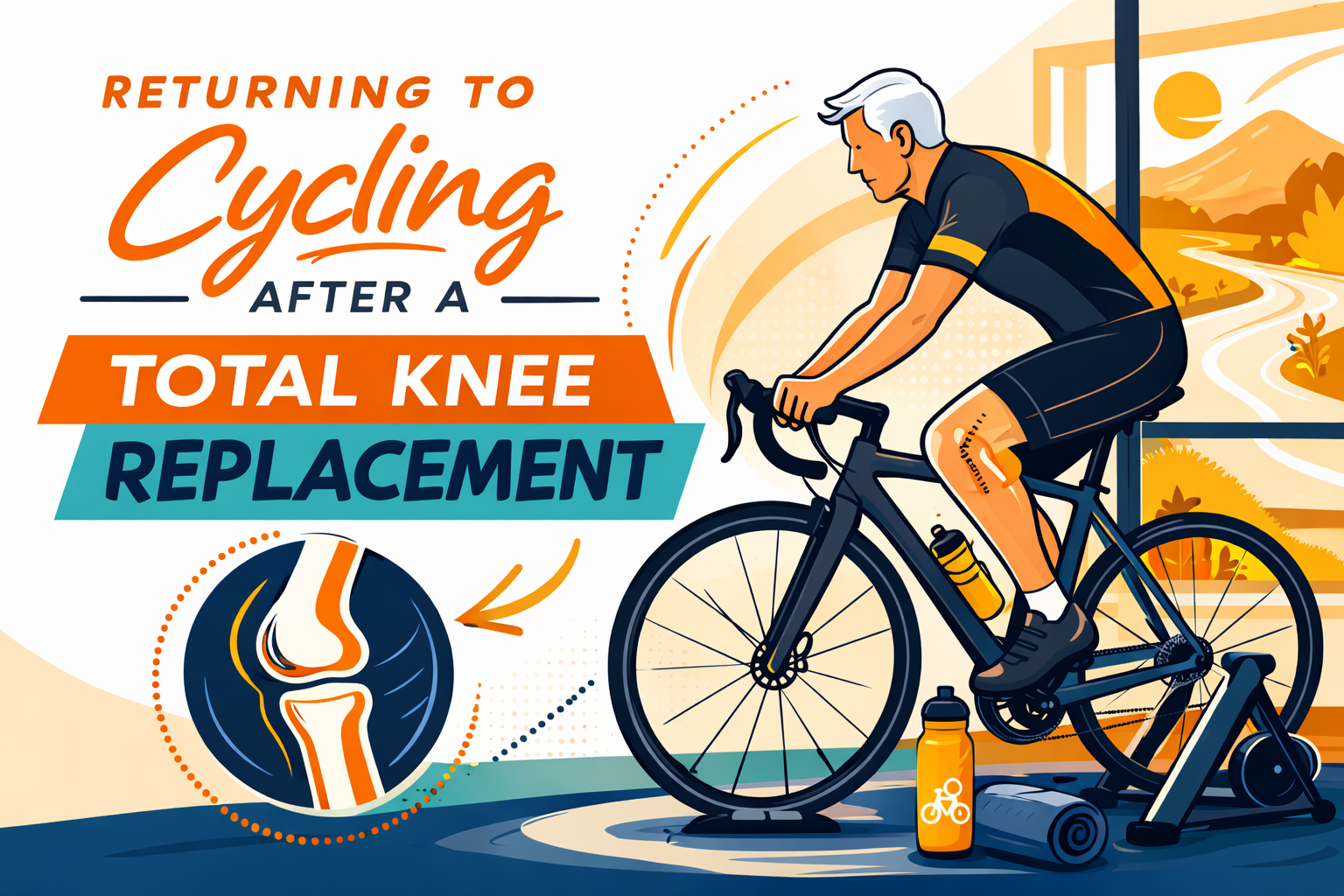
Total Knee Replacement surgery — formally known as Total Knee Arthroplasty (TKA) — is one of the most common elective orthopedic procedures performed in the United States, with roughly 800,000 surgeries performed each year.
For cyclists considering TKA, one question always comes up:
How soon can I get back on my bike?
To answer that, it helps to understand what the surgery involves — and what smart rehabilitation looks like for riders.
What Happens During a Total Knee Replacement?
A TKA involves replacing the damaged joint surfaces of the knee, most commonly:
The tibial plateau
The femoral condyles
The most common reason for surgery is osteoarthritis. While often described as “wear and tear,” arthritis is actually a complex condition influenced by genetics, biomechanics, prior injury, and environmental factors. Over time, deterioration of the joint surfaces leads to pain, stiffness, and reduced range of motion — making activities like cycling increasingly uncomfortable or even impossible.
The goal of TKA is simple: reduce pain and restore functional movement.
Recovery Starts Before Surgery: The Importance of Prehab
Successful outcomes begin before the first incision is ever made.
Preoperative rehabilitation (“prehab”) focuses on maximizing:
Knee strength
Knee range of motion
Hip and ankle strength
Core and upper body strength
Strong hips and ankles improve post-operative mechanics. Upper body strength becomes critical when using crutches or navigating stairs early in recovery.
Cyclists who enter surgery stronger typically regain function faster and tolerate early riding better.
Modern TKA Recovery: What to Expect
Today, most total knee replacements are performed as outpatient procedures, meaning you return home the same day.
Early priorities after surgery include:
Pain control
Restoring knee extension (straightening)
Regaining range of motion
Safe mobility with assistive devices
Physical therapy typically begins immediately.
When Can You Get Back on the Bike?
Weeks 0–2: Focus on Motion First
Within the first two weeks — once pain and swelling begin to settle — many riders can start gentle indoor pedaling.
This is not fitness training.
Early cycling is simply a controlled way to:
Improve knee range of motion
Reduce stiffness
Promote circulation
A stationary bike or spin bike is far safer and easier than mounting a bike on a trainer. If possible, having a dedicated indoor bike simplifies early rehab significantly.
To complete full pedal revolutions comfortably, the knee generally needs about 115–120 degrees of flexion, depending on seat height and crank length.
At this stage, the goal is smooth revolutions — not intensity.
Around 6 Weeks: Building Function
By six weeks, most riders:
Are walking without assistive devices
Can climb stairs with better control
Have improved swelling and mobility
Now cycling begins to shift from a mobility exercise to light aerobic work.
This is also the ideal time to reassess your bike fit.
Surgery changes:
Joint mechanics
Leg rotation
Overall posture
Muscle recruitment patterns
Returning to higher effort without adjusting your position can create new problems.
If you cannot access a professional fit, at minimum ensure:
Seat height allows full revolutions without hip hiking
Knee tracks cleanly over the pedal
You are not leaning away from the operative side
Pay close attention to cleats and pedal tension. Clipping in and out can be surprisingly difficult early on. Many riders benefit from:
Lowering pedal tension
Temporarily switching to flat pedals
Weeks 8–12: Return to Outdoor Riding
Most surgeons clear outdoor cycling between 8–12 weeks, especially on:
Bike paths
Quiet roads
Predictable surfaces
The biggest challenge during this phase is often emergency clipping out.
Confidence matters as much as strength here. Lower pedal tension or flat pedals remain reasonable options until reaction time and confidence are fully restored.
Off-road riding should wait longer.
Before returning to gravel or mountain biking — especially technical terrain or jumps — riders should demonstrate:
Symmetrical balance
Single-leg control
Plyometric tolerance
Adequate strength symmetry
Not all physical therapy programs assess these demands. Make sure your rehab plan includes sport-specific progression.
How Hard Should You Ride?
When reintroducing training intensity:
Stay below an RPE of 5/10 for the first 1–2 weeks
Increase ride time gradually (start around 20 minutes)
Progress toward 30–45 minutes if no increase in pain or swelling
Watch for warning signs:
Increased swelling
Loss of extension
Worsened limping
Increased pain
Regressing mobility
If you train with power (Zwift, Peloton, etc.), manually adjust your FTP expectations. Fitness will temporarily drop — that’s normal.
Progress gradually through the 8–12 week window before ramping intensity further.
When Will I Feel “Normal” Again?
Most riders feel close to their pre-surgical form by 4–6 months.
However, many report that full confidence and normalcy can take up to a year. Lingering swelling, subtle stiffness, or mental hesitation are common.
The good news?
For cyclists limited by significant arthritis pain, TKA can be life-changing. Many riders ultimately wish they had addressed the problem sooner.
Final Thoughts for Cyclists Considering TKA
Total knee replacements will continue to become more common as surgical techniques improve and the active population ages.
If you’re a cyclist considering TKA:
Start prehab early
Discuss return-to-sport expectations with your surgeon
Work with a PT who understands cycling mechanics
Progress gradually and strategically
A thoughtful, cycling-specific rehabilitation plan makes a tremendous difference in both recovery speed and long-term performance.
If you have questions about knee pain, cycling mechanics, or preparing for total joint replacement, reach out to Cycle Life PT for a free virtual consult.